Offering omnichannel customer care is something experts have talked about time and time again. Employing an omnichannel strategy has become so important that every retail company should really be doing it if they want to provide an excellent customer experience. And, according to a 2020 report, 80% of companies are now investing in omnichannel experiences. Yet, only 8.4% have all channels connected.Â
Part of the problem lies in the misunderstanding of the term. The other part lies in misunderstanding why omnichannel customer care is so important and how easy it can be to implement. If you still need some convincing, let’s start with “what is omnichannel?â€.Â
Breaking Down Omnichannel’s MeaningÂ
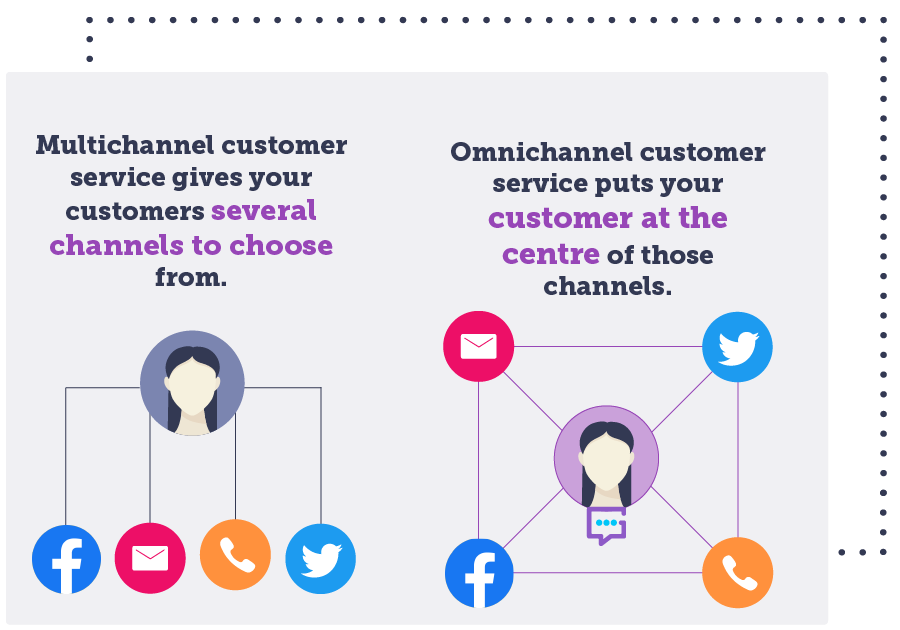
An omnichannel strategy for customer service relies on all CS channels being connected. Omnichannel customer service (CS) allows a customer to carry the same query across multiple channels without a break in the flow of conversation.Â
That means a customer can contact you through email, then follow up the query on webchat and end the conversation via SMS, all about the same query, all as one continuous conversation. Because these channels are connected in a central solution, the customer service advisor will always have the right information to continue the conversation.Â
Omnichannel vs. MultichannelÂ
The big difference between omnichannel and multichannel CS is that same connectedness. A multichannel strategy provides the customer with multiple channels with which to contact a brand. But, those channels live in isolation. This means a customer could contact you on three different channels about the same issue and your customer care team would receive – and reply to – three different interactions.
Multichannel CS is a step toward omnichannel CS but it creates unnecessary tickets for the advisors and frustration for both them and your customers. Taking that one step further solves these problems by creating a customer care journey that is hassle-free for everyone and more efficient for the company.